

Dog Chewing
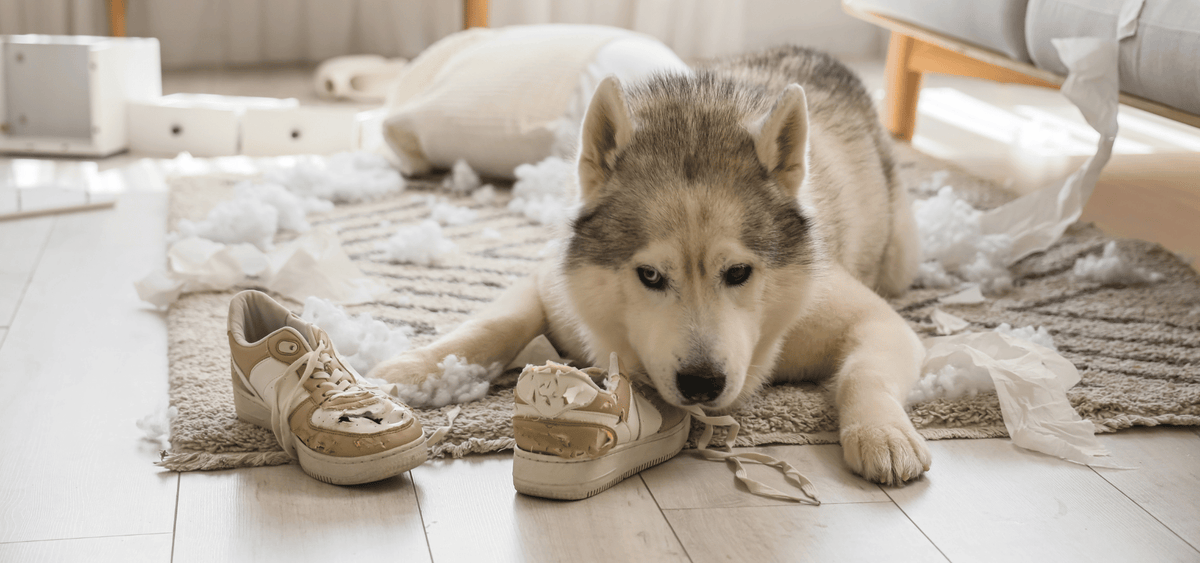
My Dog Is Chewing Things Around the House
If your dog has developed a habit of chewing furniture, shoes, blankets or other household objects, the first step is to make sure they're getting enough appropriate outlets for that behaviour.

Give them their own things to chew
Make sure your dog has access to suitable chew toys and treats.
Having something they're allowed to chew makes it much easier to redirect them when they choose something they shouldn't.

Keep tempting objects out of reach
Don't rely on your dog to make the right choice every time.
Put shoes away, keep valuable items out of reach and use gates or closed doors where necessary.
The less opportunity your dog has to practise unwanted chewing, the easier it is to change the habit.

Redirect unwanted chewing
If you catch your dog chewing something they shouldn't, calmly interrupt them and offer an appropriate alternative.
When they choose their own toy or chew, praise them.
Over time, your dog can learn: “These are mine to chew.”

Keep things interesting
Dogs can quickly lose interest in toys that are always available.
Try rotating their toys rather than leaving every toy out all the time.
You can also make toys more interesting by using food-based enrichment, such as stuffing a suitable toy with their normal food or a small amount of treat paste.
What Are the Best Things for Dogs to Chew?
There isn't one perfect chew for every dog.
Consider your dog's:
- Size
- Age
- Chewing style
- Breed and individual preferences
- How quickly they get through a chew
- Whether they prefer edible or non-edible chews

Tougher chewers
Some dogs will happily destroy a toy within minutes.
Look for toys designed for stronger chewers and choose an appropriate size for your dog.

Gentle chewers
Other dogs prefer softer toys or edible treats that they can work on slowly.
There's no need to give a dog an extremely tough chew if they don't enjoy it.

Food-motivated chewers
Stuffable toys can be a great option for dogs who love food.
A suitable toy can be filled with food or treat paste, giving your dog something to work on while providing mental enrichment.
Edible Chews vs Chew Toys
Both can have a place in your dog's routine.
The best option is often having a few different types available and rotating them to keep things interesting.

Edible Chews
Edible chews can give your dog something tasty to work on and can provide a satisfying chewing activity.
Remember that chews count towards your dog's overall food intake, so take their calories into account.

Chew Toys
Non-edible toys can provide a longer-lasting option for dogs who enjoy chewing but don't need another treat.
Stuffable toys can also combine chewing with food-based enrichment.
Can Chewing Help My Dog's Teeth?
Chewing can provide some mechanical action against the teeth, but chewing alone shouldn't replace proper dental care.
Regular dental care is important for maintaining your dog's teeth and gums throughout their life.
For advice on brushing, dental products and keeping your dog's mouth healthy, see our:
What If My Dog Suddenly Starts Chewing?
A sudden change in behaviour is worth paying attention to.
If your adult dog starts chewing things when they haven't previously done so, think about whether anything has changed.
For example:
- Has their routine changed?
- Are they getting less exercise or enrichment?
- Have they recently been left alone for longer?
- Has there been a change at home?
- Could they be bored or unsettled?
- Are they showing any other unusual behaviours?
If the change is sudden, persistent or accompanied by other signs of illness or distress, speak to your vet or an appropriately qualified behaviour professional.
Don't Punish Your Dog for Chewing
Chewing is a natural behaviour, so simply telling your dog off doesn't address why they're doing it.
Instead, focus on prevention and redirection.
- Make inappropriate things difficult to access.
- Provide appropriate alternatives.
- Reward the behaviour you want to see.
This gives your dog a clear choice rather than simply telling them what not to do.
Our Favourite Chewing Essentials


When Should I Speak to a Vet?
If your dog's chewing is accompanied by signs of pain, difficulty eating, excessive drooling, bleeding or other changes around their mouth, speak to your vet.
Likewise, if your dog suddenly develops destructive chewing alongside other changes in behaviour, it's worth discussing it with your vet.
Looking After Your Dog's Teeth
Chewing and dental care aren't quite the same thing.
Once you've found appropriate ways to satisfy your dog's natural urge to chew, don't forget about their ongoing dental health.
